PROJECT 04
Load-Cell Sensing
for Air-Supported Domes
This work combines sensing-system design and fabrication, sensor selection, and field data acquisition for air-supported agricultural domes. Structural and ground characteristics informed the instrumentation layout, while structural-response and environmental measurements were considered together to support safety assessment. The system is intended for deployment in Damyang, Republic of Korea, and Abu Dhabi, United Arab Emirates, with initial load-cell measurements carried out at Damyang.
Deployment sites and installation plans
The domestic deployment is planned for the existing air-supported dome at Damyang Air House. The overseas deployment is planned for a future air-dome installation in an agricultural district of Abu Dhabi. The photographs below show the existing Korean dome and the agricultural setting for the planned UAE installation, respectively.
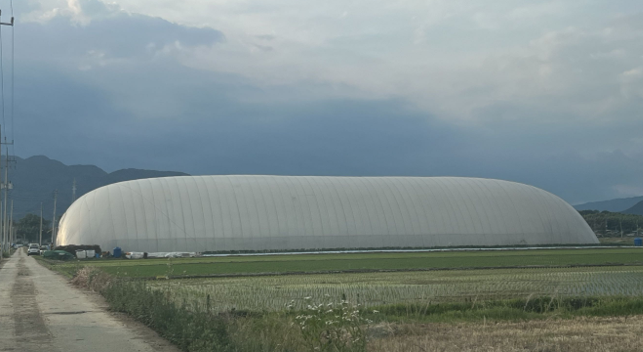
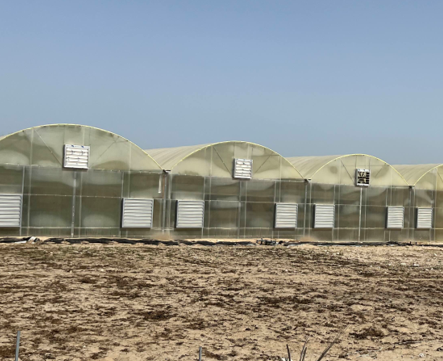
The sites shown are intended for full sensing-system deployment; the field measurements below document the initial load-cell implementation at Damyang.
System overview & field measurement
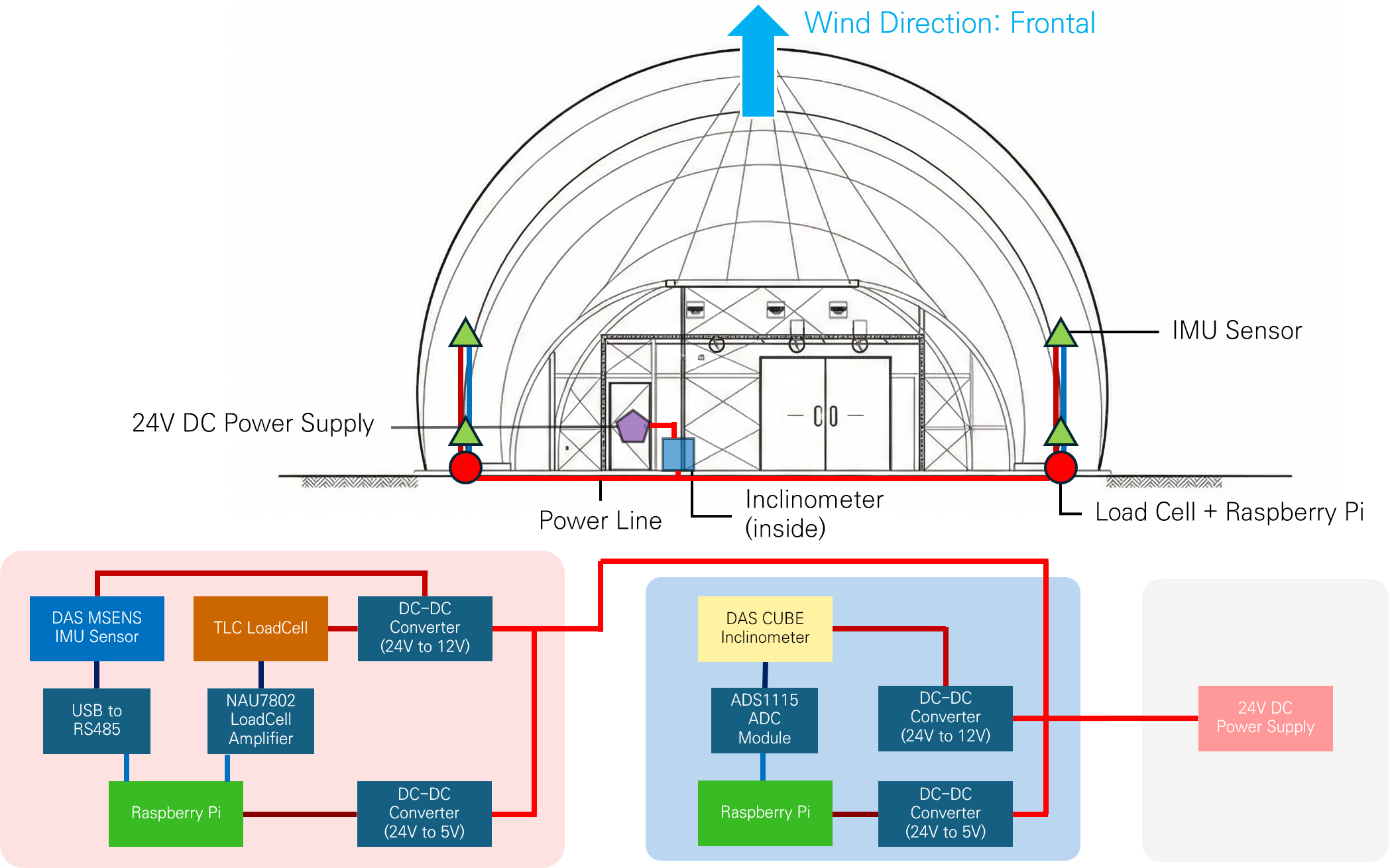
The sensing system was designed and fabricated using foundation-member and ground investigations to define sensor locations and measurement points. Load cells, accelerometer–gyroscope units, strain gauges and environmental monitoring options were evaluated to capture structural response alongside wind speed, temperature and humidity for safety assessment. Equipment selection balanced measurement range, resolution, control-system compatibility and cost.
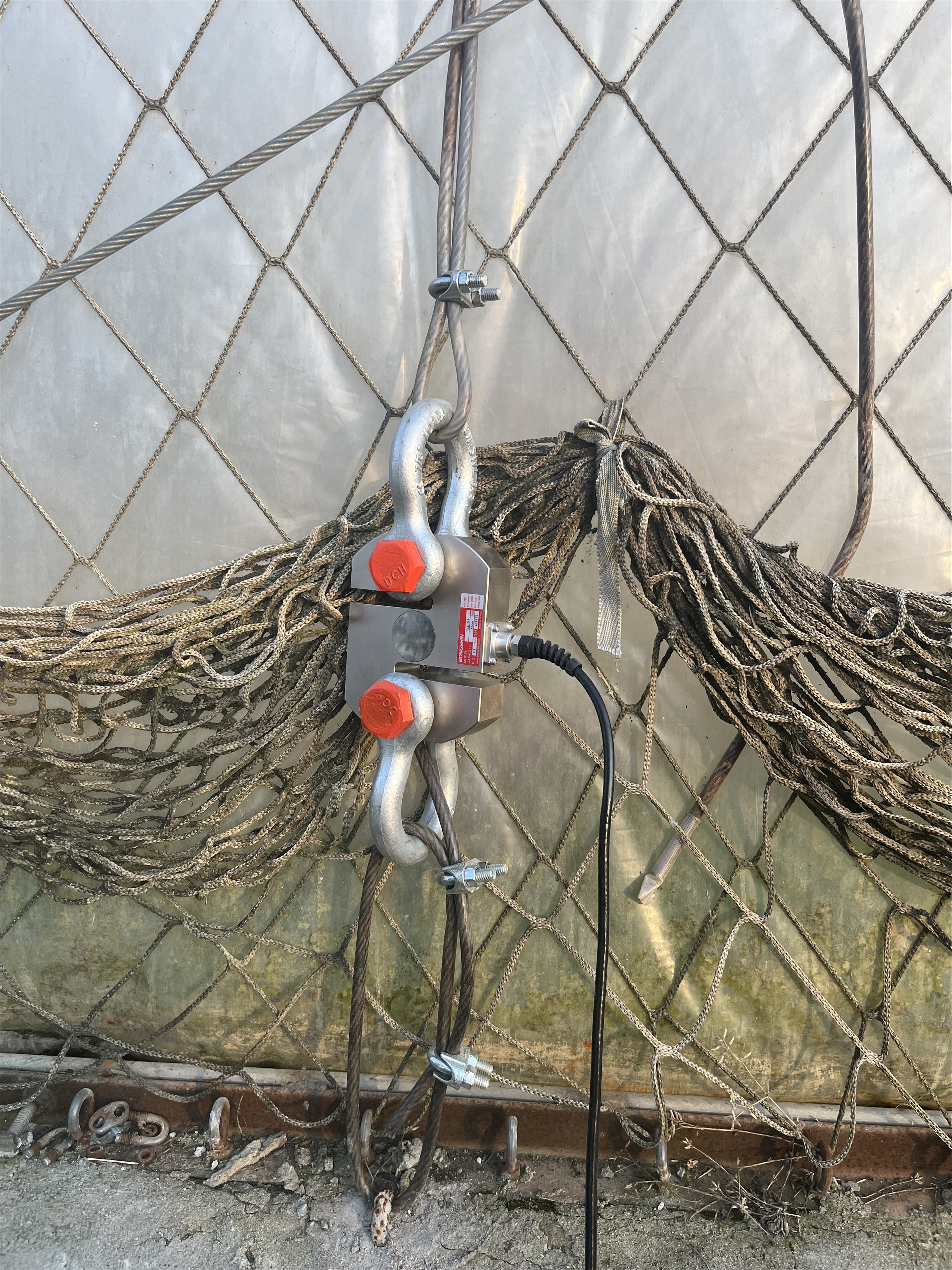
The system design supports long-term, multi-greenhouse data collection, with remote control and data transmission for central-server management. The layout below shows sensor placement, wiring, power supply and acquisition nodes; the field photograph documents the initial load-cell implementation at Damyang.
Field measurement workflow
Load cells were installed at an outer-dome wire anchor at Damyang on 15 June 2026. Readings passed from the load-cell indicator through a USB–RS485 interface to a Raspberry Pi, where the measurements were saved as CSV files.
Practical work
- Examining cable-anchor geometry and sensor attachment arrangements.
- Working with load-cell mounting and measurement-range selection.
- Connecting the indicator, USB–RS485 interface and Raspberry Pi.
- Collecting and reviewing timestamped tension records from the outdoor session.
Tools and methods: load cells · cable-tension measurement · Raspberry Pi · USB–RS485 · CSV logging · field instrumentation
Funding
This work was supported by the Korea Institute of Planning and Evaluation for Technology in Food, Agriculture and Forestry (IPET) through the Agri-Food Export Enhancement Technology Development Program, funded by the Ministry of Agriculture, Food and Rural Affairs (MAFRA) (RS-2025-02313370).
Project title: Development of Commercial-scale Vertical Farming System with Low Energy Consumption Based on Passive Air-dome Technology for Hot Climate in Middle East